Updated August 2026
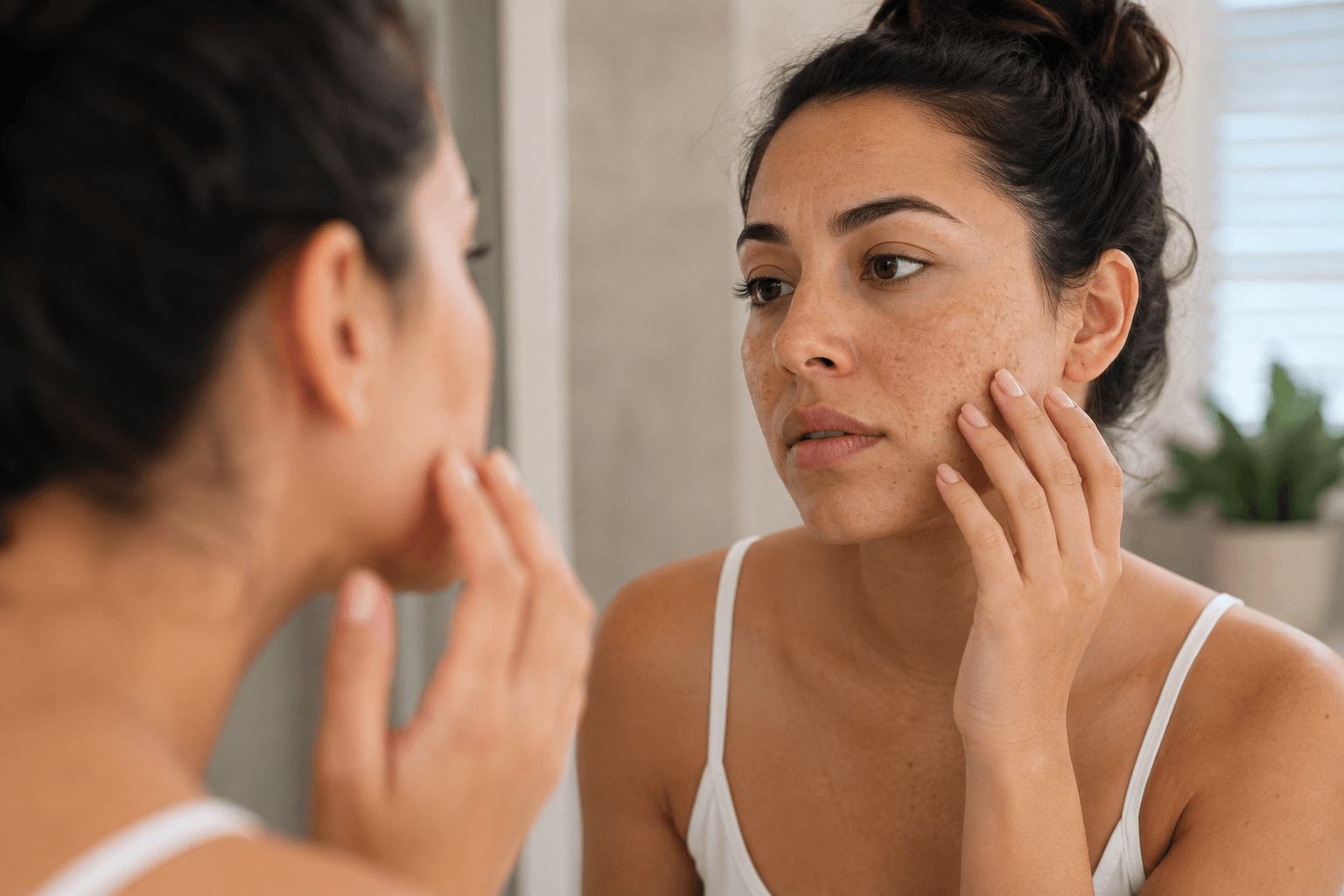
If you've caught yourself tilting your chin toward the bathroom mirror, wondering why certain patches of your skin look darker than the rest, you're not imagining things. Uneven skin tone is one of the most common concerns we hear from clients walking through our Costa Mesa location, and it rarely has one single cause. Sun exposure, hormones, old acne marks, and even the products sitting in your medicine cabinet can all play a role.
The good news is that once you understand what's behind the discoloration, it becomes much easier to figure out what will actually fix it. For a lot of people searching for chemical peels near me in Costa Mesa, California, the answer isn't just about booking any treatment. It's about matching the right peel to the right cause.
This guide breaks down the most common reasons behind dark spots and blotchy skin tone, when you should start paying closer attention, when it's worth combining professional treatment with an at home routine, and how a professional chemical peel can help reset your complexion from the inside out.
Before jumping into treatment, it helps to know what you're actually dealing with. Most discoloration falls into a few categories, and understanding which one applies to you shapes almost every decision that follows.
Years of unprotected sun exposure is the number one culprit behind flat brown spots, especially on the cheeks, forehead, and backs of the hands. These are often called sunspots or solar lentigines, and they tend to show up gradually, becoming more noticeable in your thirties and beyond. If your discoloration seems to darken every summer and fade slightly in winter, sun exposure is likely playing a starring role.
Melasma looks similar to sun damage but behaves differently. It usually appears as larger, symmetrical patches across the cheeks, forehead, or upper lip, and it's closely tied to hormonal shifts from pregnancy, birth control, or thyroid changes. Melasma is notoriously stubborn and can worsen with heat and sun exposure, which is why so many people in sunny Costa Mesa struggle with it year round.
If your dark spots showed up right where a breakout used to be, you're likely dealing with post-inflammatory hyperpigmentation. This is your skin's natural healing response, but it can take months, sometimes over a year, to fade on its own without support.
Yes. Melanin-rich skin tones tend to produce more pigment in response to inflammation or sun exposure, which means discoloration can appear more easily and take longer to resolve without professional guidance. This is one of the reasons a personalized consultation matters so much more than a generic drugstore routine.
Most uneven pigmentation is purely cosmetic, but it's worth having any spot evaluated by a dermatologist if it changes shape, color, or size quickly, becomes raised, itches, or bleeds. Routine skin checks matter, and organizations like the American Academy of Dermatology recommend an annual skin exam, especially if you have a history of sun exposure.
Once anything concerning has been ruled out, the conversation shifts from "is this dangerous" to "how do I get rid of it," and that's where professional treatment options come in.
A chemical peel works by applying a controlled solution to the skin that gently removes the outermost damaged layers. As those layers shed, they take pigmented, dull, and uneven cells with them, revealing fresher skin underneath. Over a series of sessions, this process can significantly soften the appearance of sunspots, melasma, and old acne marks while also improving overall texture and radiance.
At Belle Vie, our chemical peels are customized based on your skin type, the depth of discoloration, and how your skin has responded to treatments in the past. That personalization matters because the wrong peel intensity can actually aggravate melasma or irritate sensitive, pigment-prone skin. If you'd like a closer look at how our providers approach precision dosing, our article on why precision makes all the difference with chemical peels in Costa Mesa walks through that process in more detail.
Depending on your specific concern, a peel might include ingredients like glycolic acid, salicylic acid, lactic acid, or trichloroacetic acid, each targeting pigment, oil production, or texture in slightly different ways. This is why an in-person consultation is so important rather than guessing with an over-the-counter product.
Most people see noticeable improvement after a series of three to six peels, spaced a few weeks apart, though this varies depending on how deep and stubborn the discoloration is. Melasma in particular tends to respond best to a slower, more consistent approach rather than one aggressive session.
Depending on the strength of the peel, you can expect anywhere from mild flaking to a few days of visible peeling. Lighter peels fit easily into a lunch break, while deeper treatments may require a few days of downtime. Our team walks you through exactly what to expect before you ever sit in the chair, and you can read more about what a typical recovery timeline looks like in our guide on how long recovery takes after a chemical peel.
Chemical peels work well for a wide range of skin tones and concerns, but the ideal approach differs person to person. Generally, good candidates include people dealing with sun spots, melasma, post-acne marks, dull or rough texture, or early signs of fine lines. If you're currently using strong retinoids, have active cold sores, or are pregnant, your provider may recommend waiting or choosing a gentler alternative like a hydrafacial in the meantime.
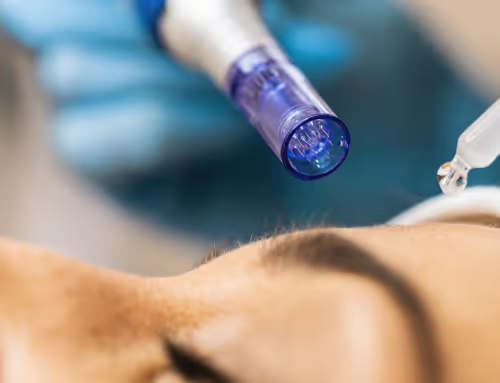
Chemical peels are often just one part of a broader skin strategy. For deeper texture concerns or more significant sun damage, treatments like microneedling can be layered in over time to support collagen renewal. If your main concern is overall skin laxity rather than pigment, a treatment like Morpheus8 may be worth discussing during your consultation as well. Our estheticians can help map out a plan that addresses tone, texture, and firmness together rather than treating each concern in isolation, and you can browse our full lineup of skin care services to see everything available under one roof.
Treatment only goes so far if the habits that caused the discoloration are still in play. A broad spectrum SPF 30 or higher, worn daily and reapplied outdoors, is non negotiable if you live anywhere near the Southern California coastline. Antioxidant serums, gentle exfoliation, and avoiding picking at acne can all help prevent new spots from forming while your peel results settle in. Many clients also find that pairing their in office treatments with a consistent home care routine, built together with our estheticians, makes results last noticeably longer.
Costa Mesa's sunny, coastal climate means residents are exposed to UV rays nearly year round, which makes professional pigment correction especially relevant here. Working with a local provider also means your treatment plan accounts for your everyday environment, from beach weekends to daily commutes, rather than following a generic, one size fits all protocol.
At Belle Vie, our Costa Mesa team takes the time to understand your skin history before recommending a peel strength or frequency, so you're not left guessing whether you picked the right option. You can learn more about our approach and philosophy on our mission statement page, or meet the providers who will be caring for your skin on our team page.
Do chemical peels get rid of melasma completely? Chemical peels can significantly lighten melasma, but because it's hormonally driven, it may return if the underlying trigger, like sun exposure or hormonal changes, isn't managed alongside treatment.
Is a chemical peel painful? Most people describe a tingling or warm sensation rather than pain. Deeper peels may cause more noticeable discomfort for a few minutes during application, which your provider can manage with cooling techniques.
How soon will I see results from chemical peels near me? Some people notice a subtle glow within a few days of a single session, while significant improvement in dark spots typically builds over a series of treatments spaced several weeks apart.
Can I combine a chemical peel with other treatments? Yes. Many clients pair peels with treatments like microneedling or Morpheus8 for a more comprehensive approach to tone, texture, and firmness.
Is a chemical peel safe for darker skin tones? Yes, when the right type and strength are selected. This is exactly why a personalized consultation matters more than following a generic peel routine.
Uneven skin tone doesn't have to be something you just live with or attempt to cover up every morning. Once you understand whether you're dealing with sun damage, melasma, or leftover acne marks, choosing the right path forward becomes a lot less overwhelming.
If you're in Costa Mesa and ready to talk through your options, our team at Belle Vie would love to build a plan around your skin, not a one size fits all script. Visit our chemical peels service page or reach out through our contact page to schedule a consultation and find out which peel is the right match for you.
%201.avif)
Beauty Vault membership
100% of your membership dollars banked for your treatments. A complimentary welcome Hydrafacial or Microneedling when you join. A treatment gift certificate for someone you love.*
Compare plans & gifts ↗*Gifts vary by membership tier. Friend gift available after your third paid month for one friend or family member new to Belle Vie. Active membership required. Eligible treatments and membership terms apply. Compare plans for all gift choices.

.svg)
.svg)
.svg)
.svg)