Microneedling has become one of the most talked-about skin rejuvenation treatments in modern aesthetics, yet one question still dominates search results, consultations, and quiet inner dialogue before booking: does microneedling hurt?
At Belle Vie Wellness & Medical Aesthetics, conversations with patients in Cerritos and Costa Mesa, CA reveal something interesting. Most people aren’t truly afraid of pain, they’re unsure what the experience will be like. They want clarity, honesty, and a realistic understanding of how microneedling actually feels, not exaggerated claims or vague reassurances.
This article takes a different approach. Instead of repeating the usual “pain scale” narrative, we’ll explore the psychology, science, and perception behind microneedling discomfort, and why many people walk away saying the treatment felt nothing like they expected.
Note: This article was updated January 2026 to reflect current aesthetic practices, patient experience trends, and modern microneedling protocols.
When someone types does microneedling hurt into a search bar, they’re rarely asking a simple yes-or-no question. What they’re really asking is:
Pain, in aesthetic treatments, is often shorthand for uncertainty. Microneedling involves tiny needles and intentional skin stimulation, which naturally triggers concern, especially for first-time patients. But discomfort isn’t binary. It’s influenced by technique, environment, mindset, and skin health.
Understanding why the question exists is the first step to answering it honestly.
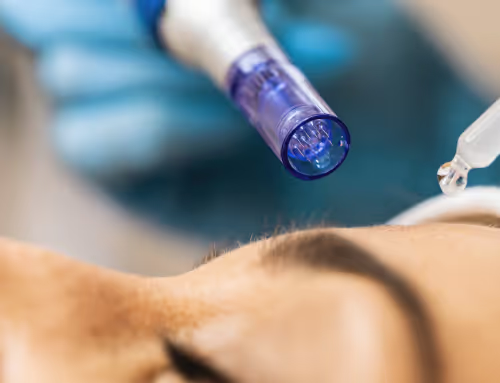
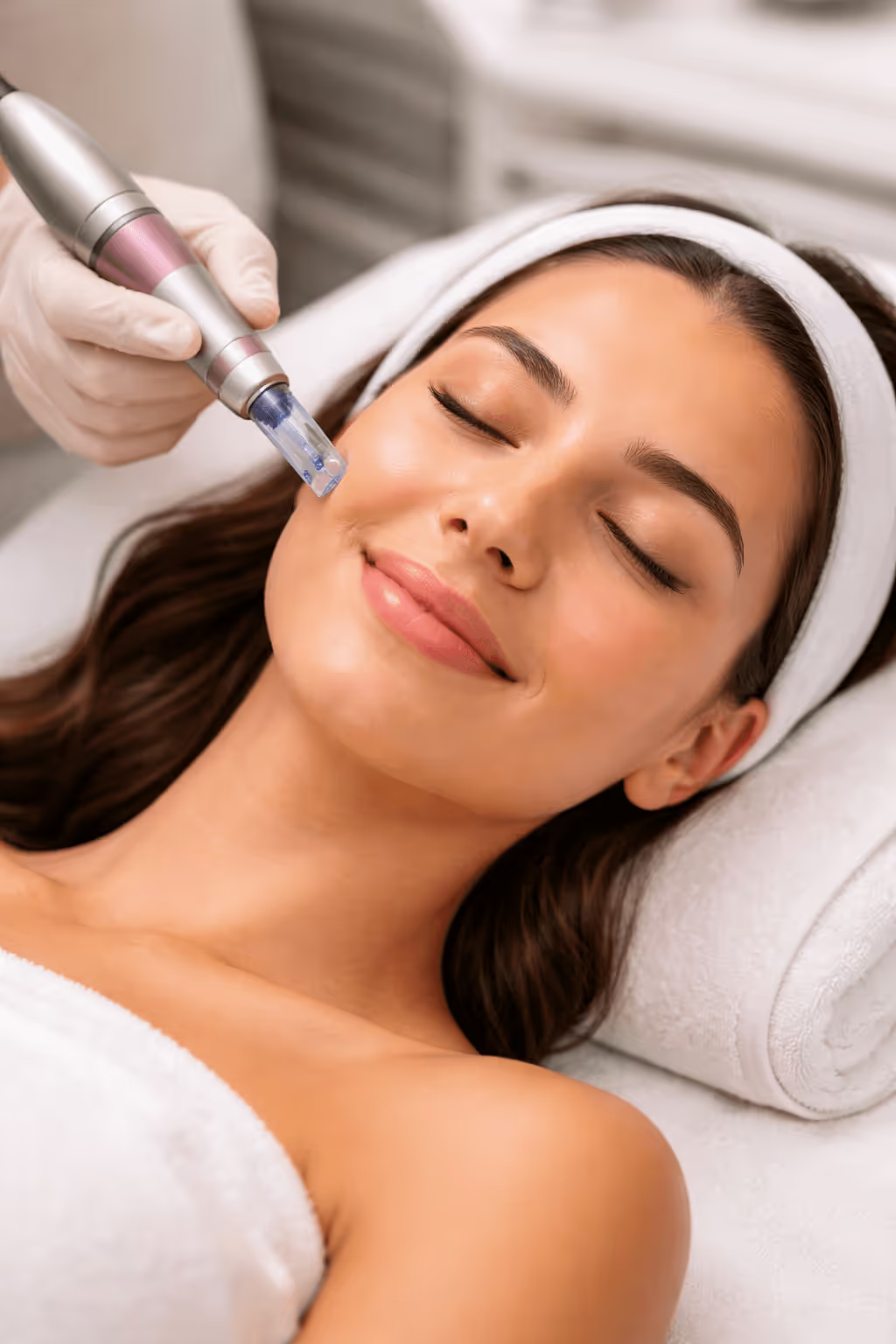
Let’s clarify something immediately: microneedling does not feel like being “stabbed” or “punctured,” despite how dramatic that sounds on paper.
Most patients describe the sensation as:
When people ask does microneedling hurt, they’re often imagining sharp pain. In reality, the sensation is diffuse, controlled, and short-lived, especially when performed by trained professionals who adjust depth and speed based on facial anatomy.
Certain areas, such as the forehead or upper lip, may feel more noticeable due to thinner skin and higher nerve density. Cheeks and jawline are generally more comfortable.
One of the most misunderstood aspects of microneedling is that no two people experience it the same way.
Factors that influence sensation include:
This is why two people sitting in the same treatment room can walk away with completely different impressions, even though the procedure was identical.
So when someone asks does microneedling hurt, the most honest answer is: it depends on your skin and how it’s treated.
Microneedling discomfort is rarely about the needles themselves, it’s about how they’re used.
Proper technique includes:
Aggressive microneedling does not equal better results. In fact, excessive depth can increase discomfort without improving collagen stimulation. Modern protocols prioritize precision over intensity, which significantly impacts how the treatment feels.
This is one reason professional microneedling experiences differ drastically from at-home devices or poorly regulated settings.
Another common variation of does microneedling hurt involves skin type concerns.
Sensitive or reactive skin doesn’t automatically mean more pain, but it does require a more customized approach. Acne-prone, rosacea-prone, or inflamed skin may feel more reactive during treatment, while resilient or thicker skin often tolerates microneedling with minimal sensation.
This is why a proper skin evaluation matters. When treatment is adapted to the skin in front of the provider, not a one-size-fits-all protocol, comfort improves dramatically.
Topical numbing creams are often part of modern microneedling treatments, but they’re frequently misunderstood.
Numbing doesn’t eliminate sensation, it softens it. Patients can still feel movement and pressure, but sharp or intense sensations are significantly reduced.
Equally important are non-medicated comfort strategies:
Interestingly, many patients report that anticipation is more uncomfortable than the treatment itself. Once the process begins, anxiety drops — and so does perceived discomfort.
Skin is influenced by environment. Patients in Cerritos and Costa Mesa, CA experience different lifestyle and environmental factors that can affect how microneedling feels.
Coastal exposure, sun habits, air quality, and even commute stress impact skin inflammation and sensitivity. These factors subtly influence sensation during treatments and recovery afterward.
Understanding local skin behavior allows providers to tailor microneedling approaches that support comfort and results, something generic online advice often overlooks.
Even if microneedling isn’t currently highlighted as a core service, education remains valuable. Understanding whether microneedling hurts helps patients compare it intelligently to other collagen-stimulating treatments and make informed decisions.
Well-informed patients:
Knowledge itself improves outcomes.
Some people confuse treatment sensation with post-treatment feeling. Microneedling recovery typically involves:
This is not pain, it’s a healing response. When patients understand this distinction, fear decreases significantly.
This is the quiet follow-up question behind does microneedling hurt.
For most patients, the answer becomes clear after the first session: the sensation is temporary, controlled, and manageable, while the skin improvements are cumulative and long-lasting.
Confidence in skin often outweighs brief discomfort. That perspective shift is why repeat treatments are so common.
The first session can feel more noticeable due to unfamiliarity, not increased pain. Once patients understand the sensation, perceived discomfort usually decreases.
Without numbing, the sensation is stronger but still tolerable for many. Most professional treatments use numbing to enhance comfort.
Not necessarily. Many patients find microneedling more predictable and less intense than certain resurfacing treatments.
Post-treatment sensations typically involve warmth or tightness, not pain, and resolve within a few days.
Yes. Skin thickness, inflammation levels, and sensitivity can influence how microneedling feels, which is why customization matters.
The most interesting thing about does microneedling hurt is how rarely patients focus on it afterward. What they remember instead is how their skin looks, feels, and behaves weeks later.
When education replaces fear, microneedling becomes less intimidating and more empowering — especially when guided by skilled professionals who prioritize comfort, safety, and results.
For patients in Cerritos and Costa Mesa, CA, understanding the experience is often the final step toward confident skin decisions.
%201.avif)
Beauty Vault membership
100% of your membership dollars banked for your treatments. A complimentary welcome Hydrafacial or Microneedling when you join. A treatment gift certificate for someone you love.*
Compare plans & gifts ↗*Gifts vary by membership tier. Friend gift available after your third paid month for one friend or family member new to Belle Vie. Active membership required. Eligible treatments and membership terms apply. Compare plans for all gift choices.

.svg)
.svg)
.svg)
.svg)