Updated August 2026
You finally got your breakouts under control, but the marks they left behind don't seem to be going anywhere. If you've been diligently using every brightening serum and scar cream on the shelf without much change, there's a reason for that. Acne scarring isn't the same as acne discoloration, and understanding the difference is key to actually treating it.
This is often where people start researching rf microneedling, since it keeps coming up as a serious option for textural scarring rather than just surface pigment. Let's break down what's actually happening with your skin, why some marks fade and others don't, and how this treatment works.
This distinction matters more than most people realize, and it's the reason so many products fail to deliver real change.
No. Flat, discolored marks left behind after a breakout are called post-inflammatory hyperpigmentation, and they typically fade on their own over several months, sometimes helped along with a chemical peel or brightening skincare.
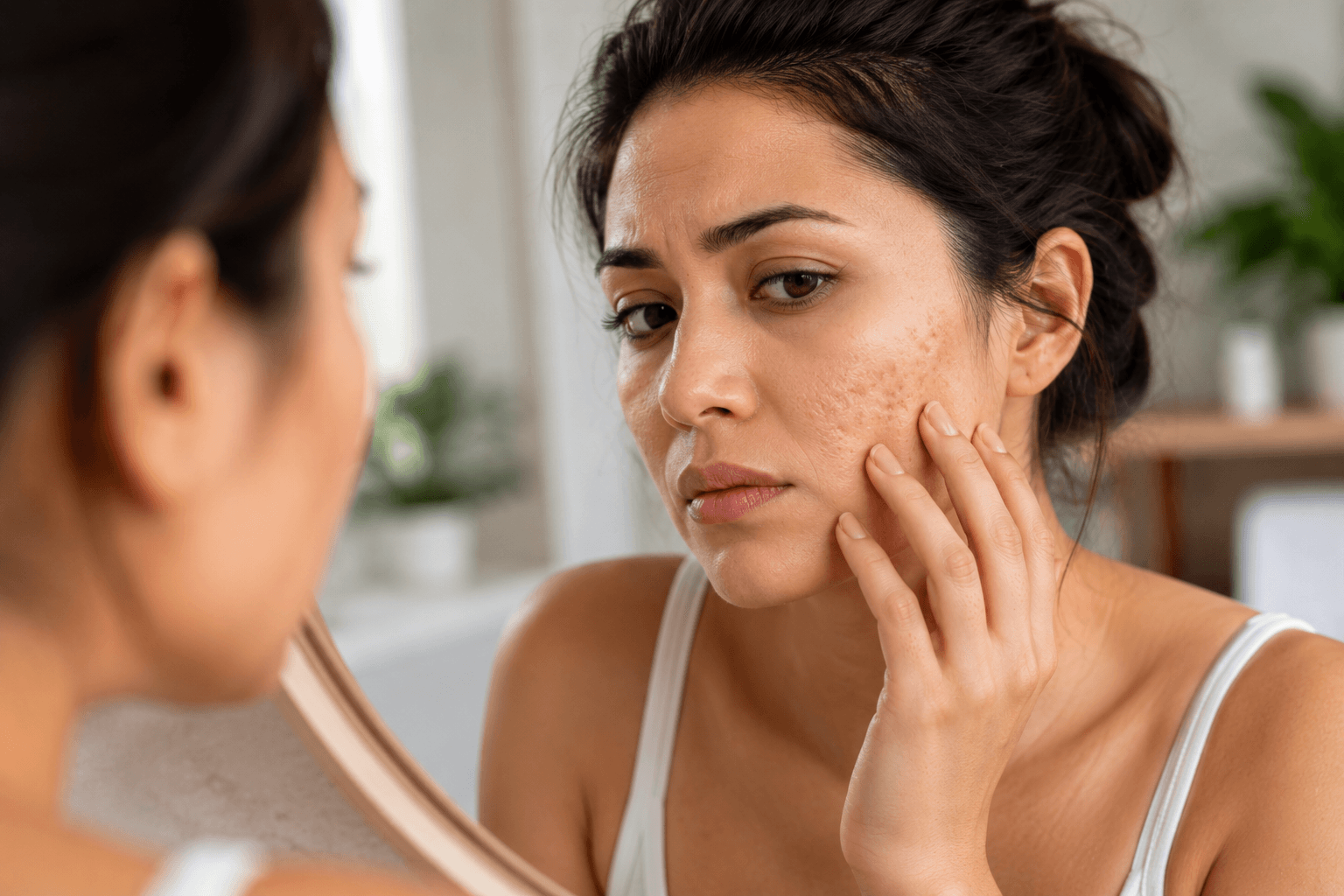
True acne scarring involves a change in the skin's texture, not just its color. This happens when the healing process after a breakout damages the collagen structure beneath the skin, leaving behind a physical indentation or, less commonly, a raised area of tissue.
Yes, significantly. Deeper, more inflamed breakouts like cysts and nodules are far more likely to damage the surrounding collagen structure than smaller surface level blemishes, which is why cystic acne carries a much higher risk of scarring.
Absolutely. Picking at breakouts increases inflammation and trauma to the skin, both of which raise the likelihood of permanent textural damage. It's one of the most common preventable causes of worsened scarring.
Yes. Genetics play a meaningful role in how your skin heals, which is why two people with similar acne severity can end up with very different long term scarring outcomes.
Dermatologists typically categorize scars into a few main types. Boxcar scars have sharp, defined edges and a somewhat square shaped indentation. Rolling scars create a wave like texture with soft, sloping edges. Ice pick scars are narrow, deep, and pointed. Each type responds a bit differently to treatment, which is part of why a professional evaluation matters before choosing a plan.
If scarring has remained visible for over a year without meaningful improvement from topical products, that's usually a sign the damage lives deeper in the skin's structure and needs a treatment capable of reaching that level. Waiting rarely makes textural scarring disappear on its own, so earlier intervention often means a shorter path to visible improvement.
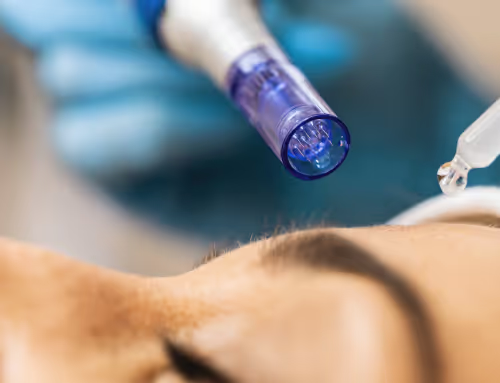
Rf microneedling combines traditional microneedling with radiofrequency energy, reaching deeper into the skin than surface treatments alone. Fine needles create controlled micro injuries while radiofrequency energy heats the tissue beneath, triggering the body's natural collagen and elastin production. Over time, this process helps rebuild healthier tissue in areas where scarring has created indentations or irregular texture.
Because acne scars form from damaged collagen, treatments that stimulate fresh collagen production in that same area tend to be more effective than surface level exfoliation alone. This is why rf microneedling is often recommended over milder options for moderate to deeper scarring. Our comparison of rf microneedling versus Morpheus8 versus Profound RF is worth a look if you want to understand how these related treatments differ.
At Belle Vie, our Morpheus8 treatment is a form of rf microneedling that many clients choose specifically for improving acne scar texture, since it allows for adjustable needle depth depending on how deep the scarring runs. Our article on whether Morpheus8 treatment is good for acne scars goes further into which scar types typically see the most improvement.
Numbing cream is applied before your session to keep things comfortable. Most clients describe feeling warmth and light pressure rather than significant discomfort throughout treatment.
Acne scarring often requires a bit more patience than other concerns, with most treatment plans involving a series of three to six sessions spaced several weeks apart, depending on scar depth and type.
Most clients experience redness and mild swelling for a day or two, similar to a moderate sunburn, with minimal disruption to daily activities. Following the right aftercare routine between sessions also helps your results build more consistently over the full treatment series.
People dealing with rolling or boxcar scarring, textural unevenness from past breakouts, or early collagen loss tend to be strong candidates. It's also considered safe across a wide range of skin tones since it relies on mechanical and heat energy rather than targeting pigment specifically. During a consultation, our team evaluates your scar type and depth to determine the right treatment plan and realistic expectations.
It's worth setting expectations honestly here too. Ice pick scars, which are narrow and very deep, tend to respond more slowly than rolling or boxcar scars, and some clients with more severe scarring choose to combine rf microneedling with additional sessions or complementary treatments over a longer timeline. A good consultation should give you a realistic picture of what's achievable for your specific scar pattern rather than a one size fits all promise.
Because rf microneedling works by stimulating your own collagen production rather than adding a temporary filler, results tend to be long lasting once the full treatment series is complete. That said, skin continues to age naturally afterward, and most clients choose to return for occasional maintenance sessions every year or so to keep both texture and overall skin quality looking their best. Pairing your in office treatments with a simple, consistent home care routine also helps protect the improvements you've already achieved.
Many clients pair rf microneedling with a chemical peel to address both lingering discoloration and textural scarring together. If active breakouts are still a concern alongside scarring, our providers can also discuss options to help manage acne itself before or alongside scar treatment, and our full skin care services page is a good place to see everything available.
Avoiding picking at breakouts, treating active acne early, and using gentle, non irritating skincare can all help reduce the likelihood of new scarring forming. If you're prone to cystic acne, working with a provider on a proactive treatment plan is one of the best ways to protect your skin's future texture.
Acne scarring is a concern that affects people across every climate and skin type, but Costa Mesa's warmer, sunnier environment can make textural scarring more noticeable, since sun exposure often deepens the shadowing effect around indented scars. That's part of why so many local clients are searching for effective, science backed treatment options.
At Belle Vie, our Costa Mesa team evaluates your specific scar type before recommending rf microneedling or a complementary treatment, so your plan reflects your actual skin rather than a generic approach. You can find our location details on our locations page.
Can rf microneedling really get rid of acne scars completely? Rf microneedling can significantly improve the appearance of many acne scars, though complete removal isn't typically realistic. Most clients see meaningful smoothing and softening of texture over a series of sessions.
Is rf microneedling better than regular microneedling for scars? For moderate to deeper scarring, rf microneedling often produces more noticeable results since the added radiofrequency energy reaches deeper into the skin's structure than needling alone.
How long before I see results from treatment? Many clients notice gradual improvement over the weeks following each session, with more significant changes visible after completing a full treatment series.
Does rf microneedling hurt? Most clients describe warmth and pressure rather than pain, especially since numbing cream is applied beforehand.
Can I combine rf microneedling with a chemical peel? Yes, many clients combine the two to address both discoloration and textural scarring, and our providers can help design that combined plan during a consultation.
Acne scars can feel like a frustrating reminder of breakouts long gone, but understanding why they linger makes the path toward smoother skin much clearer. With the right treatment plan, meaningful improvement is absolutely possible.
If you're in Costa Mesa and ready to explore whether rf microneedling is right for your scarring, our team at Belle Vie would love to help. Visit our Morpheus8 service page or reach out through our contact page to schedule your consultation.
%201.avif)
Beauty Vault membership
100% of your membership dollars banked for your treatments. A complimentary welcome Hydrafacial or Microneedling when you join. A treatment gift certificate for someone you love.*
Compare plans & gifts ↗*Gifts vary by membership tier. Friend gift available after your third paid month for one friend or family member new to Belle Vie. Active membership required. Eligible treatments and membership terms apply. Compare plans for all gift choices.

.svg)
.svg)
.svg)
.svg)