You wash your face, you moisturize, you even splurge on the occasional serum, and yet your skin still feels rough in some spots and looks uneven in others. If that sounds familiar, you are not doing anything wrong. Skin texture and tone are shaped by years of sun exposure, breakouts, and the natural slowdown of skin cell turnover, and no amount of at-home skincare can fully reverse that on its own.
This is where skin resurfacing comes in. Rather than sitting on top of the skin like a cream or serum, resurfacing treatments work to renew the skin from within, addressing the layers where texture and tone problems actually start. Updated for September 2026, here is a full breakdown of what causes uneven skin, what resurfacing actually does, and which approach might make sense for you.
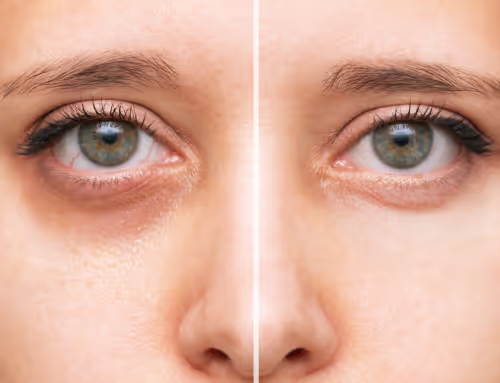
Skin texture changes for a lot of reasons. Years of sun exposure break down collagen and elastin, which are what keep skin smooth and bouncy. Past breakouts can leave behind scarring or discoloration long after the acne itself has cleared. And as skin cell turnover naturally slows with age, dead skin cells linger on the surface longer, creating a dull, uneven appearance.
Environmental stressors like pollution and repeated squinting or facial expressions also play a role over time, which is why texture and tone concerns tend to show up gradually rather than overnight.
Sun spots, also called sun damage or hyperpigmentation, are extremely common and are typically the result of cumulative UV exposure over the years. While they are usually harmless from a health standpoint, many people find them frustrating from a cosmetic perspective, especially when they show up on the cheeks, forehead, or backs of the hands.
If you notice a spot that is changing shape, color, or size, it is always worth having a healthcare provider take a look, since resurfacing treatments are designed for cosmetic concerns rather than diagnosing skin changes.
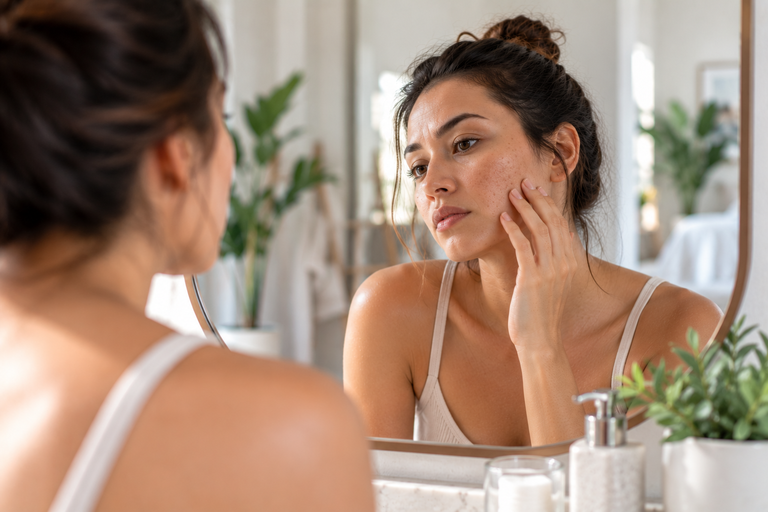
Acne scarring happens when inflammation from a breakout damages the deeper layers of skin, and depending on the depth of that damage, the skin's natural healing process is not always enough to smooth it back out completely. This is different from the temporary redness or dark marks that fade after a breakout heals. True textural scarring often needs a treatment that encourages the skin to rebuild collagen in that area.
Shallow, rolling, or boxcar-type scarring tends to respond well to resurfacing treatments that stimulate collagen renewal, while deeper scarring may need a more customized combination approach discussed during a consultation.
Skin resurfacing is a broad term for treatments that remove or renew the outer layers of skin to reveal smoother, more even skin underneath, while often stimulating collagen production in deeper layers as well. Depending on your specific concerns, resurfacing can take different forms, including chemical peels, microneedling, and radiofrequency-based treatments.
At Belle Vie, resurfacing options include treatments like chemical peels, microneedling, and Morpheus8, each designed to address slightly different layers and concerns.
Chemical peels use a solution to exfoliate the outer layer of skin, encouraging dead skin cells to shed and revealing fresher skin underneath. Depending on the strength of the peel, this can help with dullness, minor discoloration, and rough texture, with minimal downtime for lighter peels.
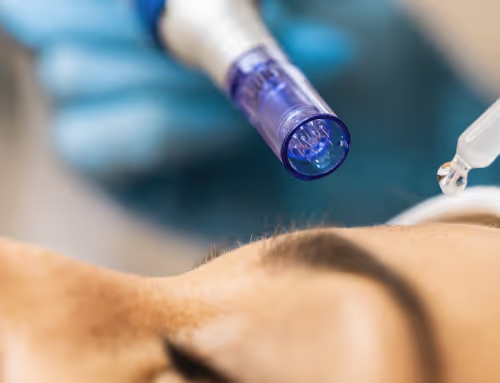
Rather than exfoliating the surface, microneedling creates tiny, controlled micro-injuries in the skin using fine needles, which triggers the body's natural healing response and stimulates collagen production. This makes it especially useful for acne scarring, fine lines, and overall skin firmness. Many providers, including Belle Vie, also offer microneedling with added serums for enhanced results.
Most people dealing with texture, tone, or early signs of aging are reasonable candidates for some form of resurfacing, though the right treatment depends on your skin type, tone, and specific goals. A consultation is the best way to figure out whether a chemical peel, microneedling, or a radiofrequency-based option like Morpheus8 makes the most sense for your skin.
Recovery varies depending on which type of resurfacing treatment you choose. Lighter chemical peels may only cause mild flaking for a few days, while deeper treatments can involve more noticeable redness or peeling for up to a week. Your provider will walk you through exactly what to expect and how to care for your skin afterward to get the best results.
Some people notice a difference after a single session, especially with peels, but most resurfacing goals, particularly acne scarring or deeper texture concerns, respond best to a series of treatments spaced weeks apart. This gives your skin time to rebuild collagen between sessions rather than trying to force results too quickly.
Between the sun exposure that comes with Southern California living and busy schedules that leave little time for elaborate skincare routines, more Costa Mesa residents are looking for treatments that deliver visible results without requiring hours of daily upkeep. Skin resurfacing offers a way to address years of sun damage, texture, and tone concerns in a series of focused appointments rather than an endless string of products.
To see which resurfacing option fits your skin best, take a look at the full range of skin resurfacing services available and how they compare.
Is skin resurfacing painful? Most resurfacing treatments involve mild discomfort at most, often described as a warm tingling or light scratching sensation, and topical numbing is commonly used for added comfort.
Can skin resurfacing get rid of acne scars completely? Results vary depending on the depth and type of scarring, but many people see a significant improvement in texture and appearance after a full treatment series.
How long do skin resurfacing results last? Results depend on the treatment type and your skincare routine afterward, but many people maintain their results for months to years with proper sun protection and periodic maintenance sessions.
What is the difference between microneedling and a chemical peel? Chemical peels exfoliate the skin's surface, while microneedling works deeper to stimulate collagen production. Many people benefit from combining both approaches over time.
Can I wear makeup after a skin resurfacing treatment? This depends on the treatment and how your skin responds. Your provider will give you specific aftercare guidance, which may include waiting a day or two before applying makeup.
Uneven texture and tone did not appear overnight, and they are not something a new cleanser is going to undo either. Skin resurfacing gives your skin the tools to actually rebuild itself, layer by layer, rather than just covering up what is already there.
If you are ready to talk through your options, visit Belle Vie Medical or explore locations in Costa Mesa to schedule a consultation.
%201.avif)
Beauty Vault membership
100% of your membership dollars banked for your treatments. A complimentary welcome Hydrafacial or Microneedling when you join. A treatment gift certificate for someone you love.*
Compare plans & gifts ↗*Gifts vary by membership tier. Friend gift available after your third paid month for one friend or family member new to Belle Vie. Active membership required. Eligible treatments and membership terms apply. Compare plans for all gift choices.

.svg)
.svg)
.svg)
.svg)