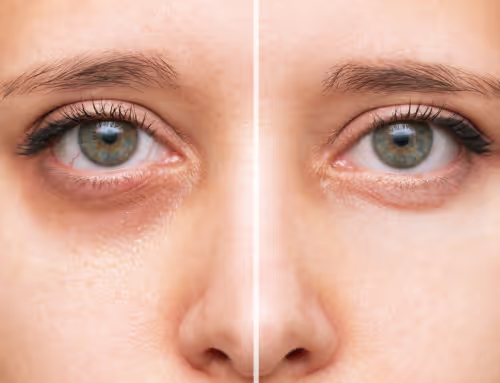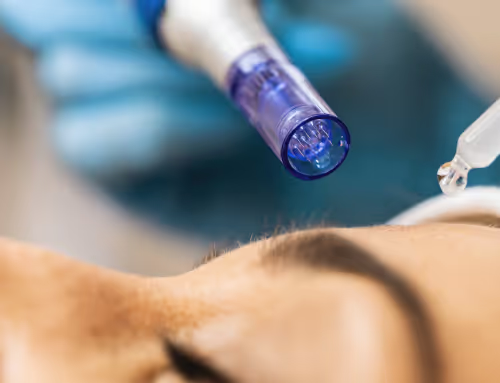
By the time most people notice sagging skin along the jawline or a loss of firmness in the cheeks, the underlying process has usually been happening for years. Skin laxity does not appear overnight, it builds gradually beneath the surface long before it becomes visible in the mirror. Understanding what actually causes this process can help you catch early signs sooner and make more informed decisions about treatment options like Morpheus8 treatment, rather than waiting until the changes feel more dramatic.
This guide walks through the biological causes behind skin laxity, the early signs to watch for, and how radiofrequency microneedling addresses the problem at its source. Updated this month for anyone in Cerritos looking to understand their skin better before choosing a treatment path.
Skin laxity refers to the loss of firmness and elasticity that causes skin to appear looser, less taut, or more prone to sagging. It happens as the structural proteins that keep skin firm, primarily collagen and elastin, begin to break down or are produced in smaller amounts over time.
Several factors contribute to this process, often working together rather than in isolation.
Yes, collagen production naturally declines with age, typically beginning in a person's mid to late twenties and continuing at a steady rate from there. This is a normal biological process, but it means the earlier you understand it, the earlier you can address it proactively.
Absolutely, and often more than people realize. Ultraviolet radiation breaks down existing collagen and elastin fibers while also interfering with the body's ability to produce new ones, a process known as photoaging. This is why sun-exposed areas like the face, neck, and chest often show signs of laxity earlier than areas that are typically covered.
Yes, significant weight loss or gain can stretch the skin beyond what its existing elasticity can accommodate, particularly if the change happens quickly. Once skin has been stretched, it does not always fully retract on its own, which can leave visible looseness even after weight has stabilized.
Genetics significantly influence how much collagen your body naturally produces and how quickly it breaks down over time, which is part of why some people notice sagging earlier than others despite similar lifestyles and sun exposure habits.
Yes, smoking restricts blood flow to the skin and introduces chemicals that directly damage collagen and elastin fibers, which can accelerate the appearance of sagging and fine lines well beyond what natural aging alone would cause.
Catching these early signals can make a meaningful difference in how proactively you address the underlying cause.
The jawline is often one of the earliest areas to show signs of laxity because it relies heavily on the structural support of underlying tissue, which is among the first areas affected by declining collagen. A previously sharp, defined jawline gradually beginning to look softer or less contoured is often one of the first subtle signs.
Fine horizontal lines, subtle looseness, or skin that no longer sits as smoothly against the neck's underlying structure are often early indicators, sometimes referred to informally as the beginnings of tech neck when combined with prolonged forward head posture from phone or computer use.
While some degree of nasolabial folds is a natural part of facial structure, a deepening of these folds over time can be linked to both volume changes and reduced skin elasticity working together.
Rather than just treating the surface, Morpheus8 combines microneedling with radiofrequency energy to reach deeper layers of tissue where collagen and elastin are produced. The controlled thermal energy delivered through the needles stimulates new collagen production while also tightening existing tissue, addressing both the visible signs and the underlying cause of laxity at the same time.
Surface treatments can improve texture and tone, but they generally do not reach the layer of tissue responsible for structural firmness. Radiofrequency energy penetrates deeper than standard microneedling alone, which is why Morpheus8 is often recommended specifically for concerns related to sagging and laxity rather than surface-level texture alone.
Morpheus8 is commonly used on the face, jawline, and neck, though it can also be applied to other areas of the body dealing with looser skin. Treatment plans are typically customized based on which areas show the earliest or most noticeable signs of laxity.
Morpheus8 tends to work best for people experiencing mild to moderate skin laxity who want to address the issue without surgical intervention. It is often a good option for those who have noticed early softening along the jawline or neck but are not yet dealing with more severe, advanced sagging that might require a different approach altogether.
Yes, many clients choose to begin treatment proactively once they notice the earliest signs of change, since supporting collagen production before significant laxity develops can help maintain firmness for longer. This preventive approach is becoming increasingly common as more people learn to recognize early signs rather than waiting until changes feel more dramatic.
A Morpheus8 session typically begins with topical numbing to ensure comfort, followed by the device delivering both the microneedling and radiofrequency components to the treatment area. Most people experience redness and mild swelling for a few days afterward, with results developing gradually over the following weeks and months as new collagen forms.
Because Morpheus8 works at a deeper level than standard microneedling, some clients also incorporate complementary treatments like chemical peels or standard microneedling into their broader skin care plan to address surface concerns alongside deeper structural changes.
Most treatment plans involve a series of sessions spaced several weeks apart, followed by periodic maintenance treatments to sustain results over time. The exact number depends on the severity of laxity and your individual goals, which is why a personalized consultation is an important first step.
Daily sunscreen use, avoiding smoking, maintaining stable body weight, and supporting overall skin health with a consistent skin care routine can all help slow the progression of laxity alongside professional treatment. None of these habits reverse existing damage on their own, but they can meaningfully support the results of treatments like Morpheus8 over the long term.
The best way to know is through an in-person consultation, where a provider can assess your specific skin concerns, discuss the underlying causes contributing to your particular case, and build a treatment plan around your goals. At our Cerritos practice, we take the time to explain not just what the treatment does, but why your skin is changing the way it is, so you can make a fully informed decision.
At what age should I start thinking about skin laxity treatments? There is no universal age, since laxity progresses differently for everyone based on genetics, sun exposure, and lifestyle factors, but many people begin noticing early signs in their thirties or forties.
Does Morpheus8 hurt? Most clients describe the sensation as a warm, prickling feeling, and numbing cream is applied beforehand to keep the treatment comfortable.
How long do Morpheus8 results last? Results can last a year or more depending on your skin and lifestyle, with many clients choosing periodic maintenance sessions to sustain their results long term.
Can Morpheus8 replace a facelift? Morpheus8 is a non-surgical treatment designed for mild to moderate laxity, and while it offers meaningful tightening, more advanced or severe sagging may still require a surgical consultation for comparison.
Is there downtime after Morpheus8 treatment? Most people experience redness and mild swelling for a few days, but there is generally no extended downtime that prevents returning to normal daily activities.
Skin laxity is not something that suddenly happens, it is something that quietly builds until one day it is simply there. Understanding the causes gives you the power to address it earlier, on your own terms, rather than reacting after the fact. If you are in Cerritos and want to know where your skin stands and what a treatment plan could look like, schedule a consultation with our team today.
%201.avif)
BeautyVault membership
100% of your membership dollars banked for your treatments. A complimentary welcome Hydrafacial or Microneedling when you join. A treatment gift certificate for someone you love.*
Compare plans & gifts ↗*Gifts vary by membership tier. Friend gift available after your third paid month for one friend or family member new to Belle Vie. Active membership required. Eligible treatments and membership terms apply. Compare plans for all gift choices.

.svg)
.svg)
.svg)
.svg)