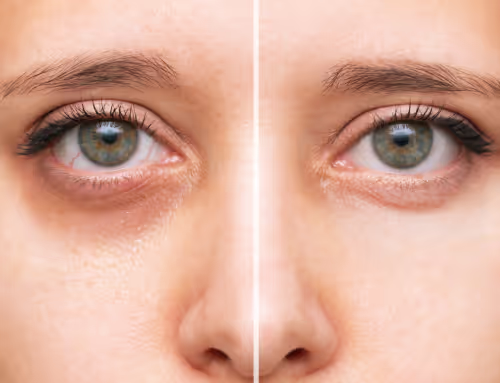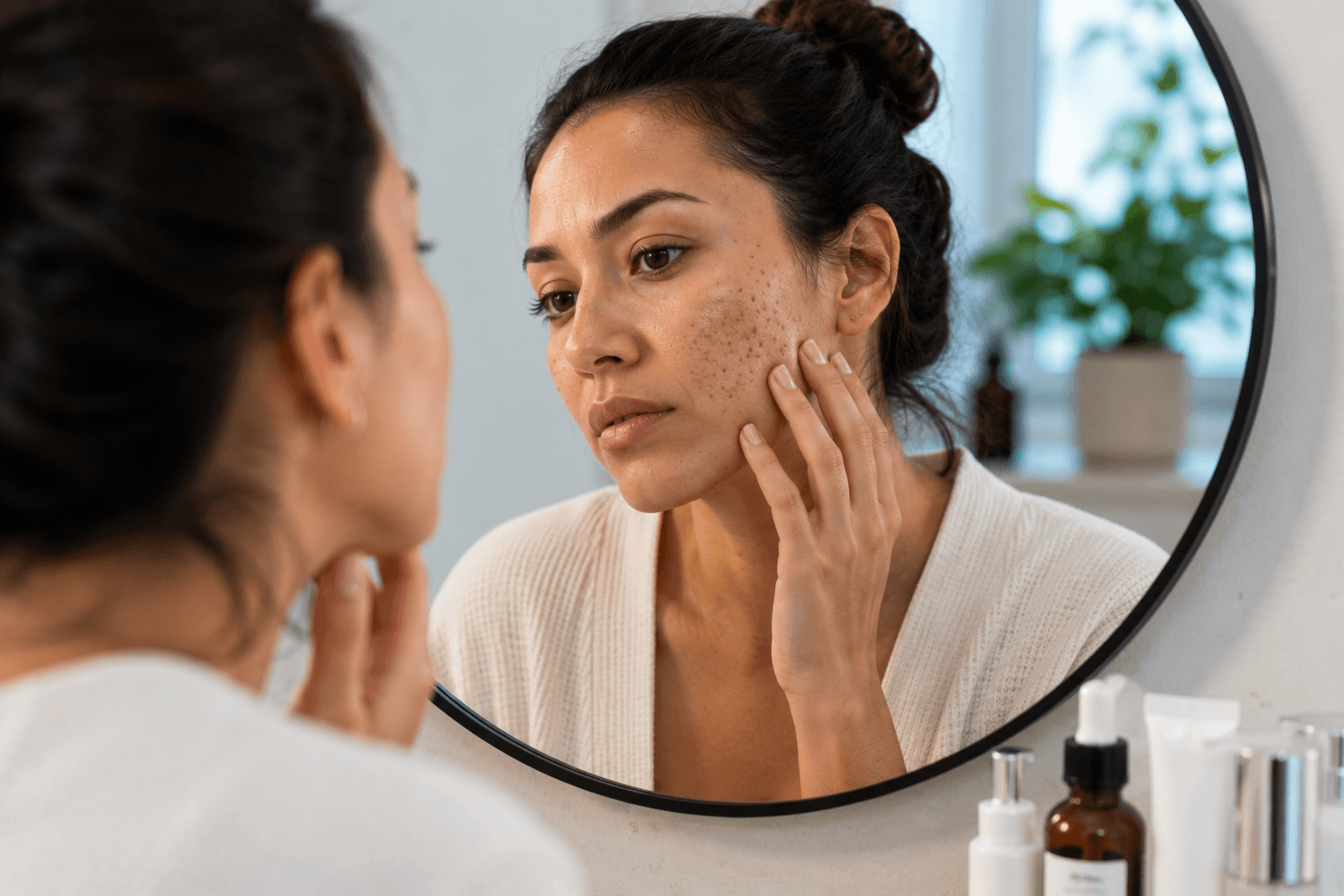
Uneven skin tone can be one of the most frustrating things to deal with, especially when it does not respond to the products sitting in your bathroom cabinet. Dark spots, patchy discoloration, and areas of skin that just will not match the rest of your complexion often point to something happening beneath the surface that a moisturizer alone cannot fix. If you have been researching VIpeels as a possible solution, understanding exactly which concerns they are designed to address can help you know if this is the right next step for your skin.
This guide breaks down the underlying skin conditions that tend to respond well to a VI Peel, along with what causes them in the first place, so you can make an informed decision rather than guessing. Updated for August 2026 for anyone in Cerritos exploring their options for brighter, more even skin.
A VI Peel is a medical-grade chemical peel that uses a blend of acids to remove damaged outer layers of skin, revealing fresher, more even toned skin underneath. Unlike milder over-the-counter exfoliants, professional peels are formulated to reach deeper layers of the skin, which allows them to address more stubborn pigmentation and texture concerns. At our Cerritos practice, VI Peels are offered as part of our broader chemical peel treatment menu, customized based on your specific skin concern.
Before jumping into treatment, it helps to understand why discoloration happens. Skin produces pigment through cells called melanocytes, and when this process becomes uneven due to sun exposure, hormones, inflammation, or aging, it results in visible patches or spots that differ from the surrounding skin.
Yes, this is one of the most common causes. Ultraviolet exposure triggers melanocytes to produce more pigment as a protective response, and over time, repeated sun exposure without adequate protection can lead to sunspots, also known as solar lentigines, particularly on the face, chest, and hands.
Melasma is a form of hyperpigmentation often triggered by hormonal changes, including pregnancy, birth control use, or hormone therapy, combined with sun exposure. It typically appears as brown or gray-brown patches, often on the cheeks, forehead, or upper lip, and can be more stubborn to treat than sun-related dark spots alone.
Yes, this is called post-inflammatory hyperpigmentation, and it happens when inflammation from a breakout triggers excess pigment production in the healing skin. This is especially common in clients with acne-prone skin and can persist long after the original breakout has cleared.
Understanding the specific concerns that VI Peels are formulated to address can help set realistic expectations for your results.
VI Peels are often used as part of a broader treatment plan for melasma, since their blend of acids helps address pigment at multiple layers of the skin. That said, melasma can be a particularly persistent condition influenced by ongoing hormonal factors, so consistency, sun protection, and sometimes a series of treatments are typically needed for noticeable improvement.
Yes, sun-induced pigmentation tends to respond well to professional chemical peels, since the treatment accelerates the shedding of damaged, pigmented skin cells and encourages fresher skin to surface in their place.
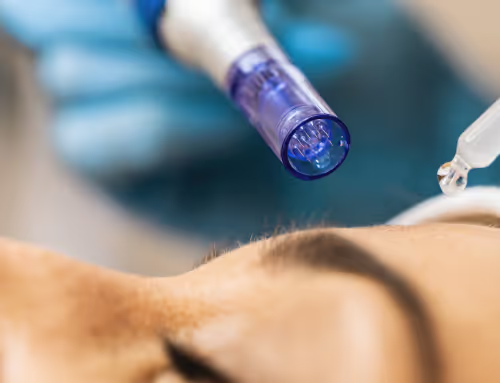
VI Peels can improve mild acne scarring and overall texture by promoting skin renewal, though deeper, pitted scarring often responds better to a treatment like microneedling, which reaches a different layer of the skin. In some cases, a combination approach using both treatments over time can offer more comprehensive improvement.
Yes, one of the most immediate and noticeable effects of a VI Peel is a brighter, more radiant complexion, since the treatment removes the buildup of dull, damaged surface skin that accumulates over time.
Not every concern is best addressed with a chemical peel alone, and knowing the difference helps set the right expectations.
No, chemical peels work on the surface and upper layers of skin, so they are not designed to address deep wrinkles caused by muscle movement or volume loss from natural aging. These concerns are typically better suited to injectable treatments, which is a separate conversation worth having with your provider.
For loose or sagging skin, a treatment like Morpheus8, which combines microneedling with radiofrequency energy to tighten deeper layers of tissue, is generally more effective than a chemical peel alone.
A VI Peel is typically applied in a single in-office session, with the peeling process happening gradually over the following days at home. Unlike some professional peels, VI Peels are formulated to be effective while still allowing most people to return to normal activities relatively quickly, though visible peeling is a normal and expected part of the process as the skin renews itself.
This depends on the severity and cause of your discoloration. Sun-related spots may show improvement after just one or two sessions, while more stubborn conditions like melasma often require a series of treatments spaced several weeks apart, along with consistent sun protection in between.
Freshly peeled skin is more vulnerable to UV damage, and unprotected sun exposure during the healing period can actually worsen pigmentation rather than improve it. Daily broad spectrum sunscreen is one of the most important parts of maintaining your results long after your peel has finished healing.
The best way to know is through a proper skin consultation, where a provider can assess the specific type and cause of your discoloration or texture concern and recommend the right treatment or combination of treatments. At our Cerritos location, we take time to understand your skin history before recommending a VI Peel or any other option from our skin care menu, ensuring the plan actually matches what your skin needs.
Can a VI Peel get rid of melasma completely? Melasma can be significantly improved with a VI Peel, particularly as part of an ongoing treatment plan, but because it is often triggered by hormonal factors, it may require maintenance treatments and consistent sun protection to manage long term.
How long does peeling last after a VI Peel? Visible peeling typically begins a few days after treatment and can last anywhere from three to seven days, depending on your skin type and how your body responds.
Is a VI Peel safe for darker skin tones? VI Peels are generally formulated to be used across a range of skin tones, though a proper consultation is important to determine the right approach for your specific skin.
Can I wear makeup during the peeling process? Most providers recommend avoiding makeup while the skin is actively peeling to allow proper healing, though your provider can give specific guidance based on your treatment.
How soon will I see results after a VI Peel? Many people notice brighter, more even toned skin once the peeling process completes, typically within a week to ten days after treatment.
Uneven tone and stubborn discoloration do not have to be something you just live with. Understanding what is actually causing your skin concern is the first step toward choosing a treatment that will genuinely make a difference. If you are in Cerritos and ready to find out whether a VI Peel is the right match for your skin, schedule a consultation with our team today.
%201.avif)
BeautyVault membership
100% of your membership dollars banked for your treatments. A complimentary welcome Hydrafacial or Microneedling when you join. A treatment gift certificate for someone you love.*
Compare plans & gifts ↗*Gifts vary by membership tier. Friend gift available after your third paid month for one friend or family member new to Belle Vie. Active membership required. Eligible treatments and membership terms apply. Compare plans for all gift choices.

.svg)
.svg)
.svg)
.svg)